Today, I watched a YouTuber analyse Dan Koe’s hugely popular article, How to Fix Your Entire Life in One Day.
After the video ended, I scrolled down to see what other people thought. Then I came across one comment:
I started watching your videos when I was in Year 3. Now I’m in Year 9.
My first thought was simple:
Six years.
Let us put aside, for a moment, whether this student has applied everything she has learnt or consistently created anything from it.
Even if she has only watched the videos, six years of following a knowledge-based creator means she has probably absorbed a considerable number of ideas, concepts, expressions and ways of thinking.
Now imagine that she did more than simply watch.
Imagine that she also wrote, practised, created videos, built projects or shared what she had learnt.
After six years, she would no longer just be someone who had “watched a lot of videos”.
She would have developed her own body of knowledge, her own perspective and a set of real skills.
That comment made me think about how different learning used to be.
When we were children, learning something new often meant going to the library, reading newspapers, searching for the right books or hoping our parents could afford to send us to an after-school class.
Today, a child can open a phone and learn directly from creators, entrepreneurs, teachers and experts from all over the world.
The knowledge we once dreamed of having access to is now sitting in their hands.
Of course, the internet is also full of distractions and meaningless content.
But that is exactly the point.
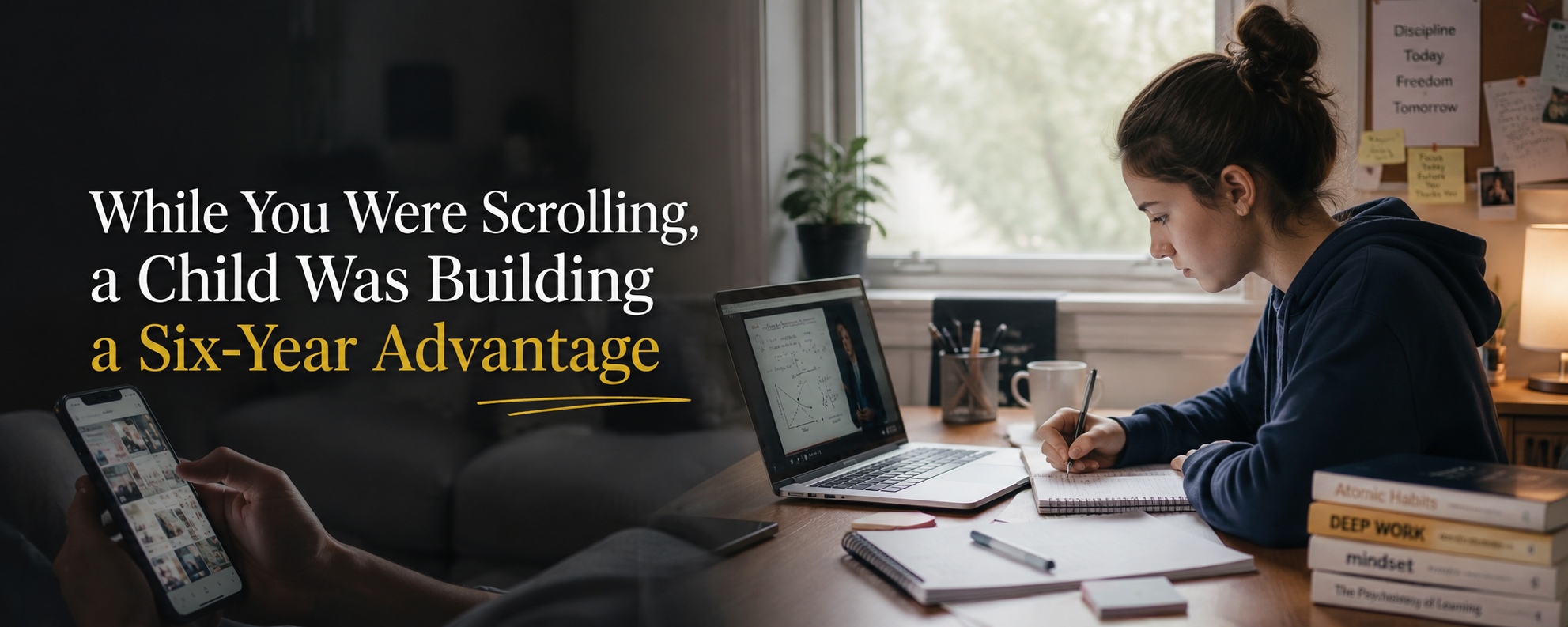
Two people can spend six years online and end up in completely different places.
One person spends six years following educational creators, studying ideas and building projects.
Another spends six years endlessly scrolling through short videos, consuming content they will forget within minutes.
The internet is not what creates the gap.
What creates the gap is where you repeatedly place your attention.
Recently, I came across a blog post that asked:
“Is learning about becoming a better person?”
Now I can answer with confidence:
Yes, but only if learning does not end with simply watching.
Learning helps you see new possibilities.
Creating forces you to organise your thoughts, question what you believe, practise what you have learnt and turn information into something that truly belongs to you.
People often say that if you are not moving forwards, you are moving backwards.
That idea is even more relevant today, because while you remain still, other people are still learning, practising and creating.
That Year 9 student may not be a genius.
She may simply have started six years earlier and placed her attention somewhere that helped her grow.
And in the future, the real problem will not be that you have to compete with Generation Z, Generation Alpha or the generations that come after them.
The real problem will be this:
By the time they have spent ten years learning, practising and creating, you may still be telling yourself—
I’ll start when I’m ready.