Updated 21 August 2026
Freelancing sounds great, doesn’t it? You can choose the projects you want, adjust your schedule, and enjoy the so-called freedom.
But whether you are a freelancer or a full-time employee, there is one thing both have in common: your income still depends on someone else being willing to keep paying you.
A company can make redundancies, a client can leave, and a platform can suddenly reduce the amount of work available.
As long as most of your income is controlled by someone else, there will always be a certain level of uncertainty in your financial situation.
Using Outlier, a Platform I Previously Worked With, as an Example
Here, I want to use a platform I actually worked with before — Outlier — as an example of just how uncertain this type of income can be.
I worked with Outlier for a while, and that experience made me realise just how unstable freelancing can be.
Outlier is not a scam, but it is certainly not a stable job either. In fact, they make it clear from the beginning that the platform does not guarantee consistent work or stable income.
Outlier operates around project demand. When businesses need large amounts of work completed, the platform recruits large numbers of freelancers. But when demand drops, the work can disappear just as quickly.
For businesses, that model offers a great deal of flexibility.
For workers, however, it offers very little security.
During one month when I was using Outlier, there were only around 7 days in February when work was available.
For the rest of the month, there was simply nothing to do and very little explanation.
Many freelancers, including me at the time, were left constantly refreshing the page and hoping a new task would appear before someone else took it.
There are also plenty of Reddit posts from users sharing similar experiences:
A number of users have reported similar problems: the work itself can be highly inconsistent, and accounts can sometimes be deactivated without a clear explanation or an obvious route to appeal.
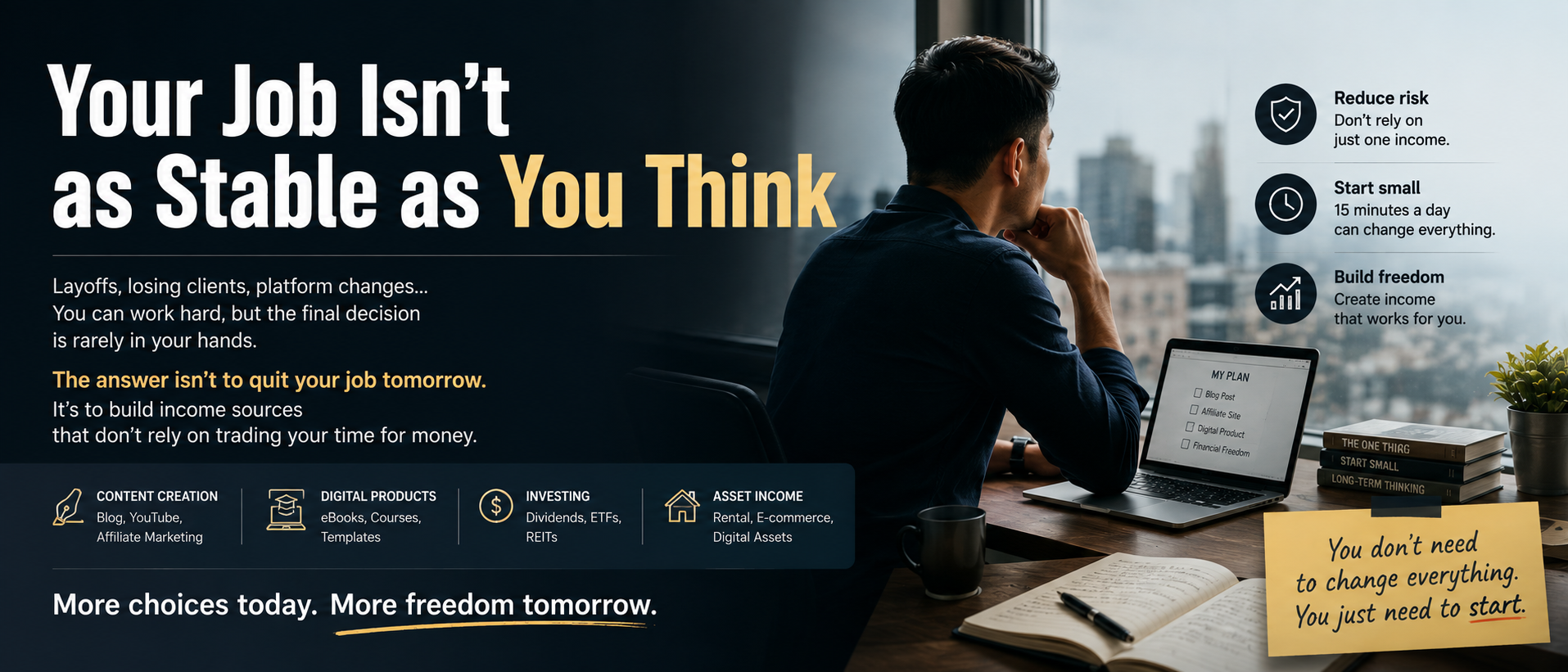
That is one of the risks of platform-based work — you can work hard, but the final decision is not always in your hands.
Full-Time Jobs vs. Freelancing: You Still Depend on Someone Else for Your Income
Many people believe a full-time job is more stable than freelancing because it comes with a regular salary.
But does that really mean stability?
Full-time employment comes with risks that are also outside your control:
- Redundancies and company closures — No matter how hard you work, if a company decides to downsize, you may still lose your job.
- Salary limits — Your income is largely decided by your employer, and pay rises are never guaranteed.
- Trading time for money — No matter how skilled you are, most salaries are still tied to the hours you work.
Freelancing may look more flexible, but it comes with a different set of problems:
- Inconsistent work availability — Having work today does not mean you will have work tomorrow.
- Competition and platform limitations — Platforms can bring in more freelancers, leaving less work available for each person.
- Income is still tied to your time — Even if you increase your rates, you are usually still exchanging working hours for money.
- Work may be released at inconvenient times — On Outlier, for example, tasks were often released in the morning, which made things difficult for people who already had full-time jobs and wanted to work in the evenings.
So whether you are employed full-time or freelancing, the core issue is fairly similar:
When most of your income depends on one company, one client, or one platform, your financial security is difficult to keep entirely in your own hands.
Real Financial Freedom Means Building Income That Is Not Completely Tied to Your Working Hours
Over time, I have come to believe that financial freedom does not necessarily mean “never working again”.
A more realistic way to look at it is this:
Build assets or systems where every pound you earn is not directly tied to another hour of work.
That is why I started paying more attention to passive income.
As you gradually build these kinds of income streams, things begin to change:
✅ You are no longer relying entirely on one salary or one platform.
✅ Part of your income can come from content, assets, or systems you built earlier, rather than only from the hours you are working right now.
✅ If one income source changes, you still have other options.
That does not mean passive income comes without risk, or that you can build something once and never touch it again.
What it can give you is more choice.
How to Start Building Passive Income
1. Find an Income Model That Suits You
There are many different forms of passive income, for example:
- Investing — dividends, REITs, ETFs
- Digital products — online courses, eBooks, membership content
- Content creation — YouTube, blogging, affiliate marketing
- Asset-based income — rental property, e-commerce assets, and similar models
Not every option will suit you.
The goal is not to do everything at once. It is to choose one direction you are willing to keep building over time.
2. Start With 15 Minutes a Day
You do not need to quit your job, and you do not need to suddenly find several extra hours every day.
Start with just 15 minutes a day.
Fifteen minutes may not sound like much, but it is enough to write a short section of an article, research a direction, organise an idea, or complete one small step.
What matters is not suddenly working for five hours one day. It is starting to build something you are willing to keep adding to.
A lot of the time, the thing holding us back is not a complete lack of time.
It is waiting for a better moment.
Waiting until work becomes less busy.
Waiting until we have more energy.
Waiting until the plan is clearer.
Waiting until everything feels ready.
But that perfect moment may never arrive on its own.
I wrote about exactly this in Stop Waiting, Start Winning 🚀.
Instead of waiting until every condition feels right, it is often better to begin first and adjust as you go.
You do not need to change your whole life at once. You just need to start.
3. Gradually Reduce Your Dependence on a Single Income Source
The goal does not have to be “quit your job tomorrow”.
A more realistic approach is to slowly build a second and then a third income source.
If you enjoy writing, you could start a blog.
If you are good at teaching or explaining something, you could consider creating a digital product.
If you are interested in content creation and affiliate marketing, you could start learning how to build a website, create useful content, and grow an online business of your own.
As those income streams gradually grow, your dependence on one job, one client, or one platform naturally begins to shrink.
Eventually, you may realise:
You can still work.
It is simply no longer your only option.
Final Thoughts: Work Gives You Income Today, While Assets Give You More Choices Tomorrow
There is nothing wrong with freelancing, and there is nothing wrong with having a full-time job.
The bigger risk is when that is your only source of income, because so many parts of it remain outside your control.
A company can make redundancies.
A client can leave.
A platform can change its rules.
And the market will keep changing.
So what I want to do now is not escape work.
It is to slowly build more things that belong to me.
An article, a website, a digital asset — each one may look small on its own.
But every time you build one, you give yourself a little more choice and a little less dependence on someone else.
You do not need a huge amount of free time, and you do not need to change your entire life in one go.
Use the 15 minutes you can find today to do one small thing that gives your future self another option.
That is already a start.
This perspective really challenges the traditional view of job security and invites a fresh look at how we achieve financial stability. The idea of shifting focus toward passive income sparks some interesting questions – what initial steps do you recommend for someone looking to pivot without jeopardizing their current financial commitments? Also, are there particular models of passive income that you think offer a better balance between risk and reward?
Hey Slavisa,
Love your take on this! Totally agree—rethinking job security and financial stability is a game-changer. If you’re looking to pivot without major risk, starting small with something like affiliate marketing, digital products, or dividend investing could be a solid move. What areas interest you the most? Always happy to bounce ideas!
As a person who works for themselves, the idea that working for others is inherently unstable really resonates with me. Relying on a single paycheck means your financial security is always in someone else’s hands, which can be risky, especially in today’s economy.
Building passive income provides not just financial stability but also the freedom to live on your own terms.
I’ve personally seen how diversifying income streams, whether through affiliate marketing, investments, or digital products, can create long-term security even if I decide to get a job. What do you think is the most beginner-friendly passive income strategy for someone just getting started?
Totally agree! My first step was learn → apply → repeat. I focus on understanding the basics, putting them into action right away, and continuously improving. The key is not getting stuck in the “preparation phase” but using each action to refine and grow. What passive income model interests you the most right now?
The article argues that working for others is unstable and that building passive income is the key to financial freedom. It highlights the risks of jobs and freelancing, shares issues with platforms like Outlier, and promotes passive income through investments, digital products, and content creation.
However, passive income isn’t truly “passive”—it requires time, effort, and ongoing management. Many ventures are competitive and come with risks. While the article gives useful insights, readers should approach passive income with realistic expectations and proper planning.
Spot on! Passive income isn’t some magic money machine—you gotta put in the work upfront and keep it running. Sure, it beats trading hours for dollars, but let’s be real: it still takes strategy, patience, and a bit of hustle. Love the insights in this article, but yeah, going in with realistic expectations is key. No shortcuts, just smart moves!
Hi ChicChat
I can not argue with you there earning passive income is the big thing now, who does not want to earn income while they sleep or on vacation with flexible time. I like how this article offers an insightful and empowering perspective on the limitations of both full-time jobs and freelancing showing both pros and cons, highlighting the core issue of neither guarantees true financial freedom. The discussion on the risks associated with both full time job and freelancing.
I like how this article is a good reminder that relying solely on active income isn’t enough; diversifying through passive income is the true path to financial freedom and stability.
Absolutely! Who wouldn’t want to make money while chilling on vacation or catching some Z’s? ???? This article really hits home—just grinding away at a 9-to-5 (or even freelancing) isn’t the ultimate solution. The breakdown of risks and limitations makes it clear: real financial freedom comes from smartly diversifying with passive income. Time to level up!
This article really got me thinking about what freedom really means. It’s a stark reminder that whether you’re freelancing or working full-time, you’re still dependent on someone else and that short-term stability can be risky. The push to build passive income feels like a call to reclaim control over our financial futures, making me wonder how soon I can start laying that groundwork.
Right? It really hits home how true freedom comes from having control over your income, not just relying on a paycheck. I’ve been on the same path—figuring out how to build something sustainable for the long run. The best part? You can start laying the groundwork today, even with small steps. What’s your first move?